
Why ventilation matters and how to get it right
Good workplace ventilation is not just about compliance. It affects indoor air quality, staff wellbeing and productivity. In practical terms, it helps determine whether a commercial space is fit for purpose. 2,3
When ventilation is poor, the signs show up quickly. Air feels stale. Heat and humidity build up. Concentration drops. In some workplaces, contaminants and process fumes become part of the problem as well. 3,5
That matters commercially as well as legally. The CBI has highlighted evidence suggesting that a major reduction in indoor pollution could lift productivity significantly in office settings, while parliamentary research notes that people spend around 80–90% of their time indoors. 1,2
Why ventilation is good for business
Ventilation is there to do a job. It helps dilute stale air. It helps remove heat, humidity and airborne contaminants. It helps create a workspace people can work in properly. 3
Done well, it can help to:
- support employee health and wellbeing
- improve comfort and concentration
- reduce work-related ill health and absence
- support productivity and workplace safety
- protect products, processes and equipment in the right environment
Alongside its legal importance, effective ventilation simply makes good business sense.
Your legal duties as an employer
In simple terms, employers must make sure enclosed workplaces receive enough fresh or purified air. That means replacing indoor air that has become stale, hot, humid or contaminated through occupancy, machinery or workplace processes. 3
How much ventilation do I need?
As a broad rule of thumb, fresh-air supply should not normally drop below 5 to 8 litres per second per person. Many commercial building guides use 10 litres per second per person as a sensible design target. 4
That is a useful benchmark, not a substitute for proper design. The right answer still depends on the building, the number of people using it, the processes carried out and the level of control the space needs. Clean Air can help: Call, Contact Us or Book a Free Site Survey.
Some settings have specialist requirements
Some environments need more than general ventilation. Medical areas, welding bays, food production areas and other process-led spaces may require specific airflow, extraction or filtration requirements built in from the start.
In those cases, general ventilation will need to sit alongside LEV, COSHH controls or other specialist measures.5
Natural and mechanical ventilation: a practical comparison
Most workplaces do not rely on just a theory lesson. They need the right answer for the building. In practice, that usually means understanding where natural ventilation works well, where mechanical ventilation is needed, and where a hybrid approach makes most sense.3,6
Natural ventilation
Simple and low-cost, but harder to control.
Natural ventilation uses passive openings such as windows, doors, vents, roller shutters and grilles to bring fresh air in and move stale air out. It can work very well in the right setting. The trade-off is control.
Airflow depends on outside temperature, wind conditions and how the space is actually used day to day.
Where natural ventilation works well:
- lower installation and running costs
- very simple operation
- no fan noise from the system itself
- useful where the building layout and external conditions suit it
Where it can fall short:
- airflow is harder to guarantee
- performance changes with the weather
- it is rarely enough on its own in larger commercial and industrial buildings
- opening doors or windows can clash with comfort, security or process needs
- That is why natural ventilation can be useful, but on its own it often lacks the consistency many workplaces need.
Higher control and reliability, with greater capital and maintenance needs.
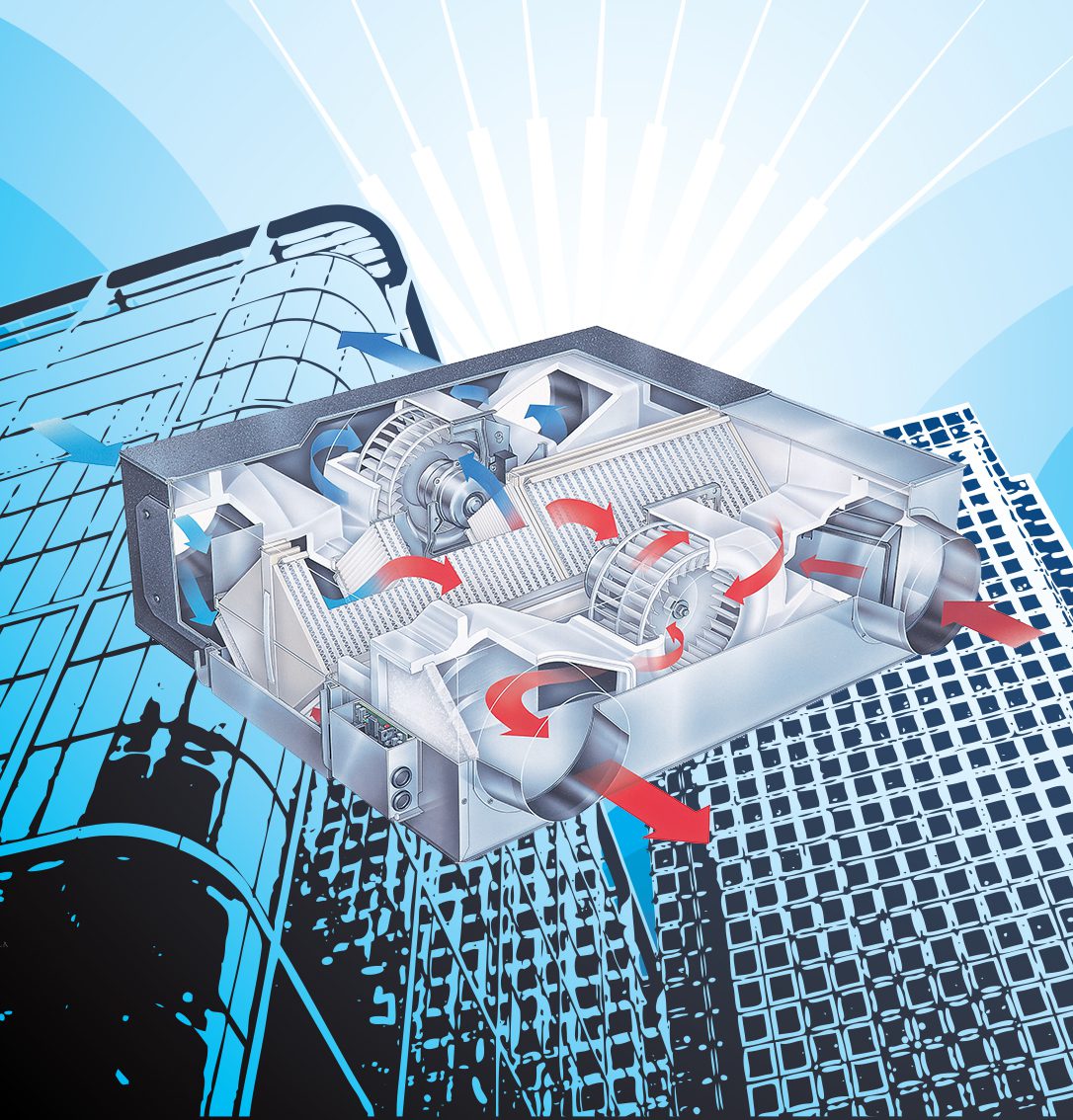
 Mechanical ventilation uses powered systems such as extract fans, air handling units and MVHR to control airflow more precisely. It is the stronger option where airflow rates need to be more predictable, where internal heat loads are higher, or where pollutants and process risks are part of the picture. 3,5
Where mechanical ventilation is strong:
- better control over fresh-air delivery
- more consistent performance through the year
- scope to manage temperature, humidity and filtration effectively
- easier to design around occupancy and operational demands
What needs weighing up:
- higher installation costs
- the need to choose the right system rather than simply the biggest one
- running and maintenance requirements
- noise and plant-space considerations
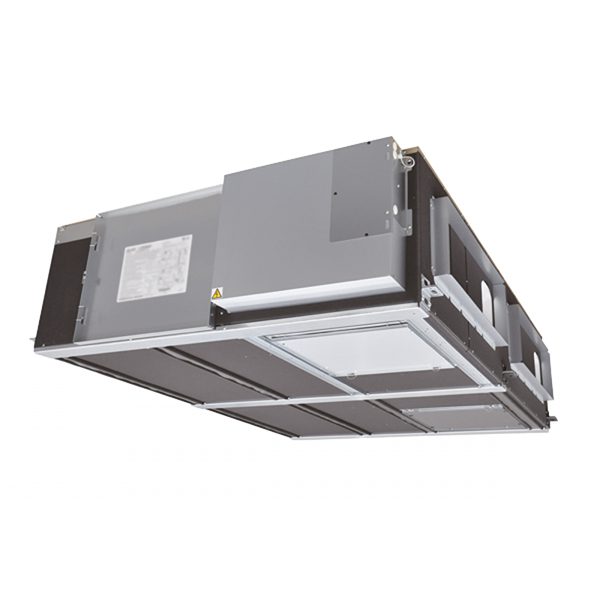
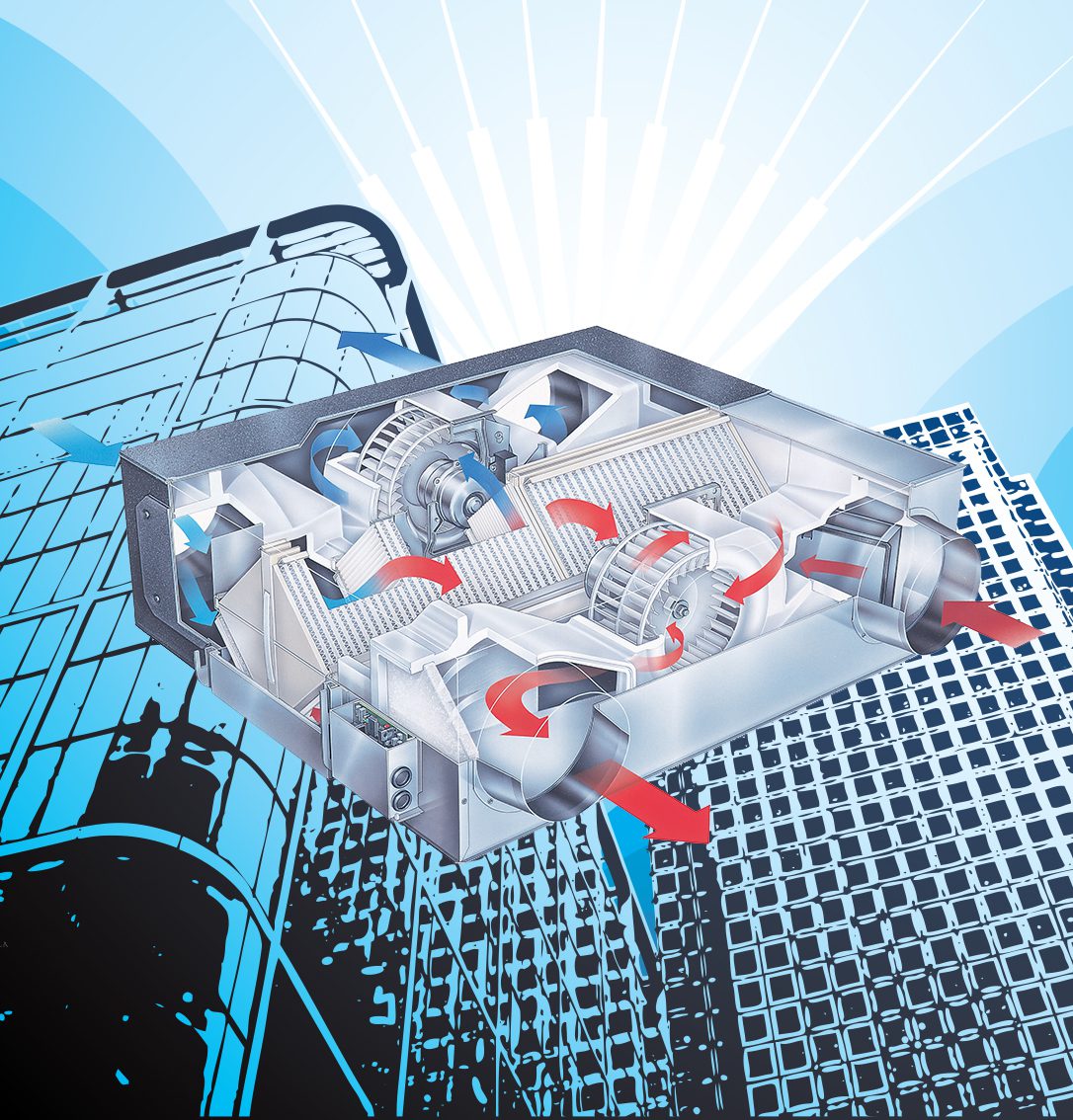
In environments where energy efficiency and fresh-air control are both priorities, MVHR is an effective solution. Systems such as Daikin VAM or Mitsubishi Lossnay are good examples of the kinds of technology available that will suit many applications and building requirements.6,8,9
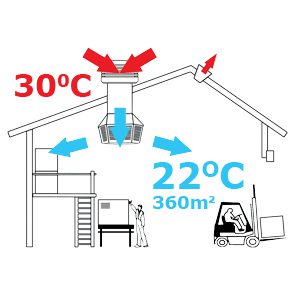
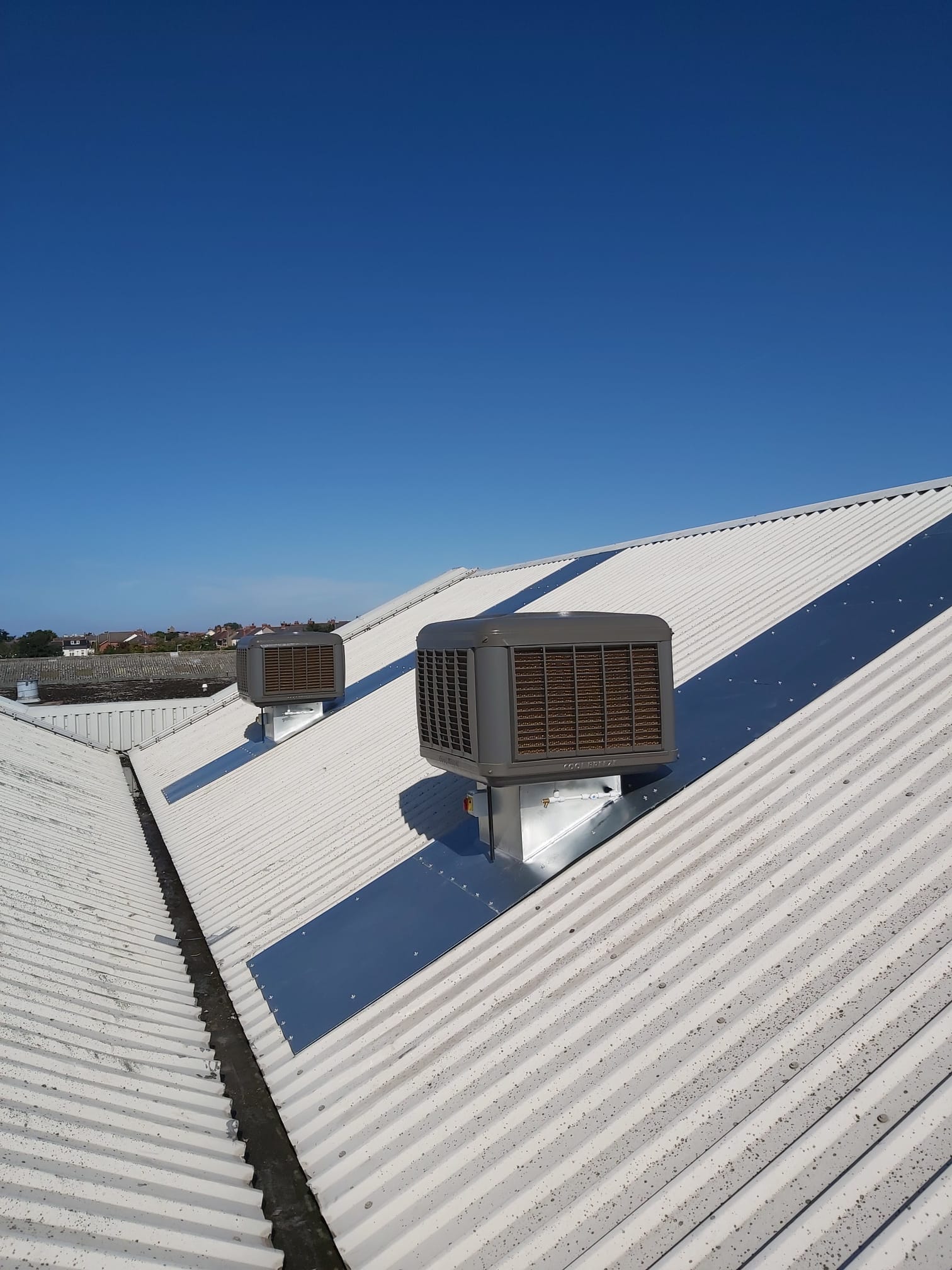
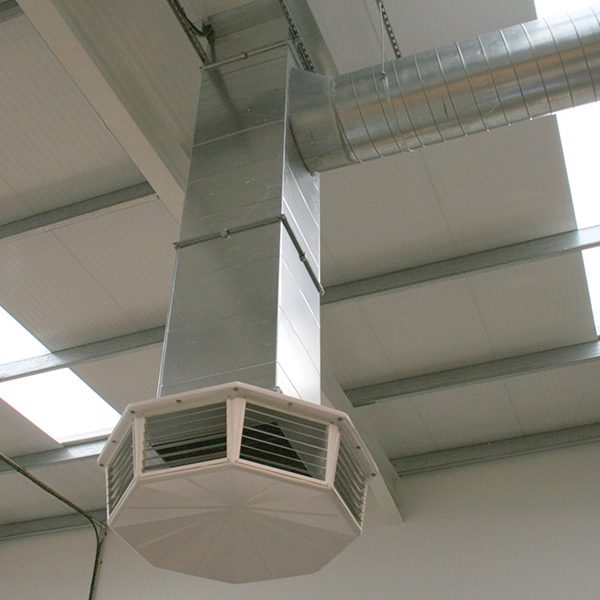
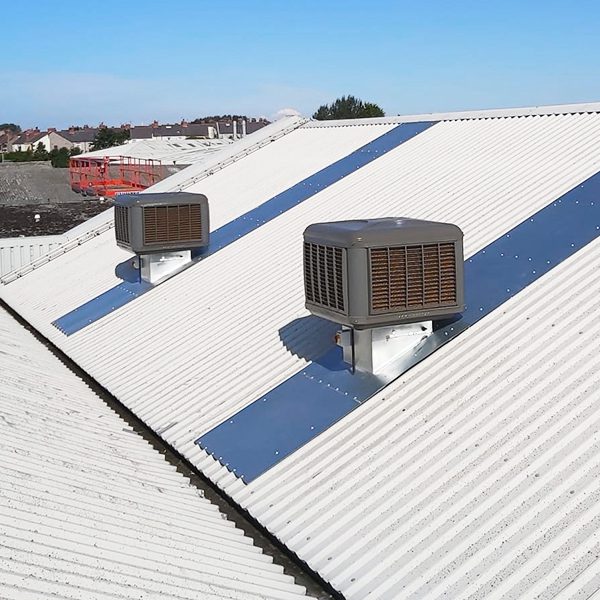
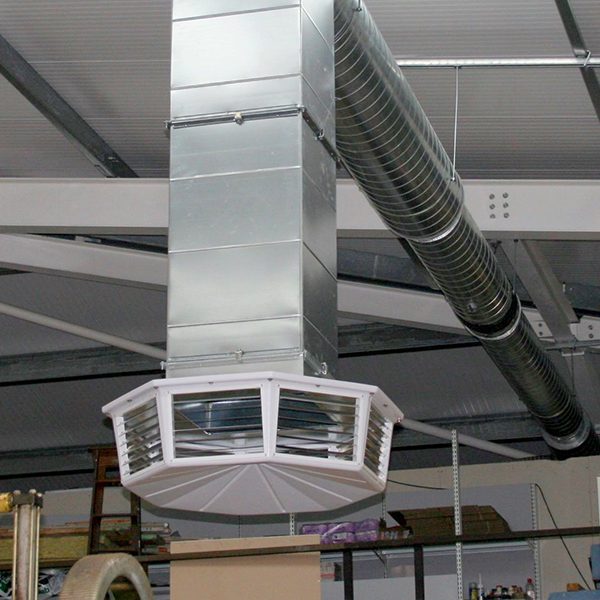
 For warehouses, distribution and logistics hubs, and larger production spaces, evaporative cooling is almost always the most sensible answer where both fresh-air ventilation and economical cooling are needed.
It delivers large volumes of fresh air, helps control internal temperatures and, in large premises, is far more economical to run than many traditional compressor-based air conditioning systems.
Clean Air has been installing and maintaining evaporative coolers since 1998 and was one of the earlier specialists to bring commercial evaporative cooling into wider use in the UK. That depth of experience matters when choosing what will actually work in a large-space environment.
There is no “best” solution; it is all about the right solution for your space
 This is the point that matters most. There is no universal ventilation solution that suits every building. Some premises need straightforward extract ventilation. Some benefit from MVHR. Some large spaces are better suited to evaporative cooling. Some need ventilation to sit alongside air conditioning or heating as part of a wider HVAC strategy. 6,7,8,9
The right answer depends on the building, the people in it, the work being carried out and the degree of control the environment needs. That is where experience matters. Not just product knowledge, but judgement about what will work in real life, in your premises, for your people.
Need help with workplace ventilation?
Clean Air has been providing commercial HVAC advice and installation expertise since 1989. Across ventilation, evaporative cooling, air conditioning and heating, the aim is the same: to find the solution that is compliant, practical, reliable and fit for purpose. 6,7,8,9
Call Clean Air today: Call 01327 301383
References
• Confederation of British Industry (CBI) (2023) ‘Air quality in the workplace – the most important environmental issue you probably weren’t aware of’. Available at: https://www.cbi.org.uk/articles/air-quality-in-the-workplace/
• Parliamentary Office of Science and Technology (2023) ‘Indoor Air Quality’. Available at: https://post.parliament.uk/research-briefings/post-pb-0054/
• Health and Safety Executive (HSE) ‘Ventilation in the workplace’. Available at: https://www.hse.gov.uk/ventilation/
• Health and Safety Executive (HSE) ‘Using CO2 monitors – ventilation rate guidance’. Available at: https://www.hse.gov.uk/ventilation/using-co2-monitors.htm
• Health and Safety Executive (HSE) ‘Local exhaust ventilation (LEV): workplace fume and dust extraction’. Available at: https://www.hse.gov.uk/lev/
• Clean Air ‘Ventilation’. Available at: https://www.cleanair.co.uk/ventilation/
• Clean Air Group ‘Evaporative Cooling / Ventilation’. Available at: https://www.cleanair.co.uk/evap-cooling-ventilation/
• Clean Air Group ‘Air Conditioning’. Available at: https://www.cleanair.co.uk/air-conditioning/
• Clean Air Group ‘About Clean Air’. Available at: https://www.cleanair.co.uk/about-clean-air/